Samsung's Galaxy Note 5 is excellent overall, and the only phone to buy if you want to write by hand. However, you'll pay a huge premium for a modest upgrade from last year's model, and less pricey competitors will satisfy many.
Growing up, my family never gave much credence to living a super-healthy lifestyle. Whole Foods wasn’t in every major city, and most of our food choices were just good old south-Louisiana Cajun dishes. The terms “gluten,” “hydrogenated oils,” and even “organic” were never mentioned in our household.
Les Olympiades internationales de mathématiques (International Mathematical Olympiad en anglais) constituent un championnat international de mathématiques concernant des élèves à l'issue de leurs études secondaires. Les Olympiades ont lieu chaque année dans un pays différent.
Histoire
Les premières Olympiades internationales de mathématiques se sont déroulées en 1959 en Roumanie et regroupaient des participants de 7 pays d'Europe de l'Est (Bulgarie, Hongrie, Pologne, République démocratique allemande, Roumanie, Tchécoslovaquie, Union soviétique et Yougoslavie). Depuis, elles ont eu lieu tous les ans, sauf en 1980, en raison de dissensions internes1.
Actuellement, plus de 100 pays des cinq continents sont concernés. Chaque pays envoie une équipe de 6 candidats au maximum (avec un chef de délégation et un adjoint, ainsi que d'éventuels observateurs). Les élèves doivent avoir moins de 20 ans et ne pas avoir commencé leurs études supérieures, mais aucune limite n'est imposée quant au nombre de participations. L'épreuve est individuelle mais il existe un classement (non officiel) par équipes (cf. infra).
Format de l'épreuve et récompenses
L'épreuve consiste à résoudre sur deux jours, en deux séances de 4 heures et demie, deux séries de trois problèmes issus de la géométrie plane, de l'arithmétique, des inégalités ou de la combinatoire. Leur résolution fait appel plus au raisonnement qu'à des connaissances sophistiquées : les solutions sont souvent courtes et élégantes. À chaque problème est attribué un total de 7 points.
Chaque pays, excepté le pays organisateur, peut proposer des problèmes au comité de sélection qui est mis en place par le pays organisateur, qui en sélectionne certains afin d'en écourter la liste. Les chefs de délégation arrivent quelques jours avant les élèves et se regroupent alors pour choisir les 6 exercices. Étant donné qu'ils connaissent les sujets avant les épreuves, ils sont séparés des élèves jusqu'à la fin de celles-ci. Les élèves sont accompagnés avant les épreuves par les chefs de délégation adjoints.
Les copies des élèves sont notées conjointement par les chefs de délégation de ce pays et les coordinateurs choisis par le pays organisateur (ou le chef de la délégation qui a proposé le problème pour les élèves du pays organisateur). En cas de désaccord, l'ensemble des chefs de délégation fournit un avis définitif.
Les médailles et mentions sont attribuées à titre individuel, selon les scores des participants, sur les critères suivants :
1/12 des participants reçoivent une médaille d'or ;
2/12 des participants reçoivent une médaille d'argent ;
3/12 des participants reçoivent une médaille de bronze ;
tout élève, qui ne reçoit aucune médaille mais qui obtient la note de 7/7 sur un exercice, obtient la mention honorable.
Des prix spéciaux peuvent être attribués pour des solutions extrêmement élégantes. Courantes avant 1980, elles sont plus rares depuis : les dernières ont été attribuées en 1988, en 1995 et en 2005.
Le Bulletin officieldu Royaume du Maroc (en arabe : : الجريدة الرسمية للمملكة المغربية), en abrégé BORM ou simplement BO, anciennement Bulletin officielde l'Empire chérifien, est une publication de l'État marocain, éditée — en arabe et en français — par le Secrétariat général du gouvernement et consignant notamment les textes des lois, des dahirs, des décrets et des traités internationaux. L'édition générale, en arabe, est bihebdomadaire, et celle de la traduction officielle en français bimensuelle.
Sa première édition, mise en place dans le cadre du Protectorat français dans l'Empire chérifien établi par le traité franco-marocain de Fès (30 mars 1912), remonte au . Son en-tête, qui était alors « EMPIRE CHÉRIFIEN : Protectorat de la République Française AU MAROC »1, a laissé place à « EMPIRE CHÉRIFIEN »1 à la suite de l'indépendance retrouvée en 1956, et enfin à « ROYAUME DU MAROC »1 en 1957, le sultan Sidi Mohammed (ben Youssef) devenant le roi Mohammed V.
Histoire[modifier | modifier le code]
Initialement, fut « créé un Bulletin Officiel du Gouvernement Chérifien et du Protectorat de la République Française au Maroc, destiné à publier les décrets et décisions du Gouvernement Chérifien, les lois, décrets, arrêtés et décisions du Gouvernement de la République relatifs au Maroc ainsi que les arrêtés et décisions du Commissaire Résident Général »1 (article 1 de l'arrêté résidentiel du 2 septembre 1912 portant création du Bulletin officiel, établi par Hubert Lyautey et paru dans le premier numéro du 2, soit sept mois après l'instauration du protectorat français par le traité franco-marocain de Fès). Son en-tête était « Empire chérifien : Protectorat de la République française au Maroc »2. Ce Bulletin officiel de l'Empire chérifien : Protectorat de la République française au Maroc, publié à Rabat, comme les suivants, et d'abord en français, connut une première version en arabe l'année suivante3,4.
Parallèlement, le 10 avril 1913 — environ cinq mois après la naissance du premier Bulletin officiel de l'Empire chérifien : Protectorat de la République française au Maroc et quatre mois après la convention franco-espagnole de Madrid définissant la zone d'influence espagnole au Maroc (27 novembre 1912) — fut publié à Madrid le premier « bulletin officiel de l'Espagne au Maroc », alors nommé Boletín oficial de la Zona de Influencia española en Marruecos (« Bulletin officiel de la zone d'influence espagnole au Maroc »), avant d'être rebaptisé Boletín oficial de la Zona de Protectorado español en Marruecos (« Bulletin officiel de la zone de protectorat espagnol au Maroc ») à partir du 10 décembre 19185.
Sept jours après la reconnaissance de l'indépendance du Maroc par la France (2 mars 1956), le Bulletin officiel de l'Empire chérifien : Protectorat de la République française au Maroc laissa place au Bulletin officiel de l'Empire chérifien (no 2263 du )6,7, et près d'un an et demi après, au Bulletin officiel du Royaume du Maroc (no 2353 du )8,9, « Sa Majesté Sidi Mohammed (ben Youssef) », sultan de l'Empire chérifien, devenant « Sa Majesté Mohammed V », roi du Maroc.
---الرابط خارج التغطية للوقت الراهن اعيد الاتصال لاحقا---
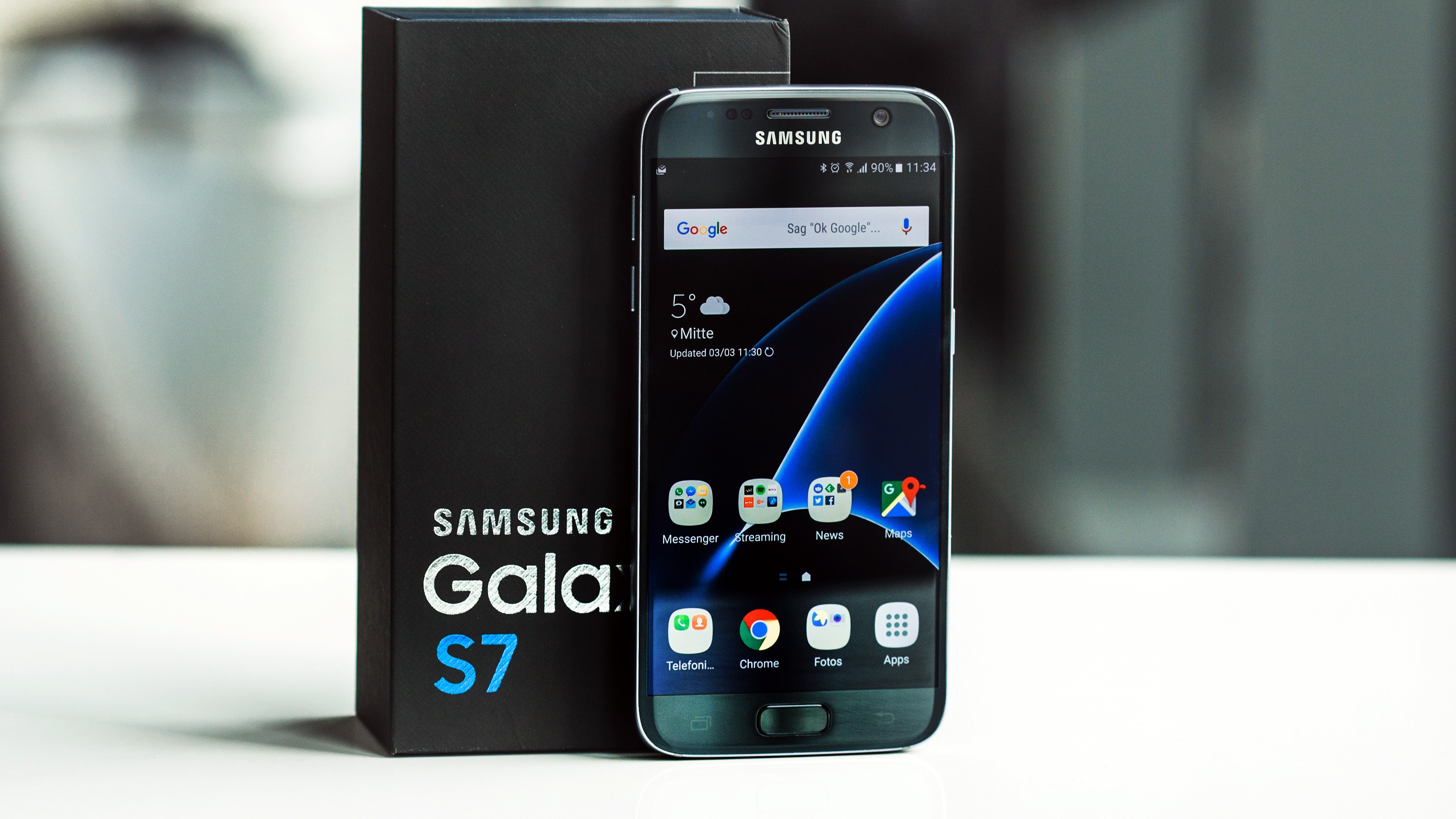
The GoodPolished design. Awesome camera. Long battery life. microSD storage slot and water-resistant (again!).
The Bad Annoyingly
reflective. Smudge magnet. Plastic-looking selfies even with no filter.
No removable battery, which isn't surprising, but is still a compromise
compared to 2014's S5.
The Bottom LineThe fast, powerful, beautiful Galaxy S7 phone is 2016's all-around phone to beat.
Summer update
It's been a dramatic year for Samsung and its
Galaxy line. After introducing the Galaxy S7 to rave reviews in March --
we still love it, by the way -- along came the Galaxy S7 Active.
Equipped with a beautiful display, speedy processor, microSD card slot,
excellent 12-megapixel rear camera, and the largest battery Samsung ever
put in a smartphone, the Galaxy S7 Active received some unwelcome
attention for issues related to its most highly-touted feature:
waterproofing -- or its lack thereof.
While
still a very decent phone overall, the Galaxy S7 Active's inconsistent
performance in the water has sapped our enthusiasm, and we can no longer
recommend the phone with complete confidence. (Note that Samsung
released a statement that it has identified and fixed a problem on the manufacturing line.)
Meanwhile, Samsung's Galaxy Note 7, rumored to feature a 5.7-inch curved screen, USB-C port, and iris scanner for unlocking the phone with your eyes, will be officially unveiled on August 2 in New York at Samsung's Note 7 "Unpacked" event. And of course, there's the forthcoming iPhone 7,
expected to come in early September, and rumored to include three
models -- an iPhone 7, an iPhone 7 Plus, and an iPhone 7 Pro -- all of
which may (or may not) include a new waterproofing feature.
The ultimate way to test a new phone? Travel with it. When
you're seeing sights and losing yourself to the moment, there's no room
to tolerate a poor camera or buggy software, slow speed or short battery
life. If there's a flaw, you'll find it.
So I tested
the Samsung Galaxy S7 in London and Berlin, while colleagues also took
it for a spin in San Francisco and Sydney. And you know what? It did
great. Better than great. In fact, the S7 was an awesome phone that
never cracked under the pressure of being the only way I take pictures
and navigate completely unfamiliar terrain, all while keeping battery
life going during long days out.
Straight up: the Galaxy S7 is the best all-around phone out today. It's superior to the excellent Google Nexus 6P, Apple iPhone 6S, LG G5 and HTC 10. In fact, the only phone that surpasses it is its own fraternal twin, the larger, curvy-screen S7 Edge,
which is technically my top pick -- but only if you're willing to
splurge. Sure, there are some potentially worthy rivals out beyond the
horizon -- the iPhone 7,
the next Nexus model, and the Galaxy Note 6. But none of them will
likely be on the market for months to come. So, for now, the Galaxy S7
and S7 Edge remain the best phones money can buy.
Here's what I found (along with fellow S7-testers) while
using the S7 around Europe. You can also scroll to the end for a specs
comparison chart.
Perfect for pockets, but smudgy as hell
I began
my testing on London's crowded, bagpipe-festooned bridges and streets.
Since I constantly mashed the S7 into my jeans and jacket pockets only
to retrieve it again for a weather check, photo, digital payment or to
navigate around, its approachable size was a much better fit for me than
a larger phone. "Medium" by today's bonkers standards, it has a
5.1-inch screen.
Throughout
all this nonstop handling, the S7's curved back and sides made it
comfortable to hold, and the one time I dropped it it didn't dent or
break. That was only a few feet off the floor inside a pub, mind you --
I'm sure it'd sustain more damage if it had clattered onto pavement.
I spent a good, long time staring at the S7. That curve-back
design I mentioned and some very slight rounding on the edges around
the display are damn nice, giving the phone a far more luxe and
contoured appearance than most, including last year's ramrod-straight Galaxy S6. In fact, look closely at the details and you can see that this S7 is built better than previous Galaxy phones.
One downside to the S7's shiny metal-and-glass backing is that
smudges pile up on smudges, leaving a semi-permanent sheen of finger
grease all over your expensive property. It's gross, and a pain to
constantly clean, which always fails anyway. But like all beautiful
phones, you're bound to slap a case on it anyway, so it's almost a moot
point -- just not an excuse.
Camera, camera, camera!
I took a boatload of photos in London while testing the phone,
but when my sister and I went to Berlin for the weekend, all hell broke
loose. Every pastry and pretzel, imposing museum, graceful river
crossing; every glorious kebab and lip-smacking beer became an
opportunity for dutiful documentation
What was confirmed again and again is that crisp photos from
the 12-megapixel camera countered low-light interference in every
darkened cocktail bar, moodily lit restaurant and dusk-dimmed park. Although this camera has fewer megapixels than last year's S6, it takes better photos. Scenes are brighter, which makes the action easier to see.
Even in low-light scenes, such as a Berlin speakeasy, the S7
trumps the iPhone 6S, yielding brighter, more usable photos. Digital
noise was still there, just diminished; those small speckles of color
that infiltrate the picture are an inevitability in low-light digital
camera shots.
Whip-quick autofocus was also a winner, grabbing
clear shots of moving objects, like swaying flowers (yes, I really do
take photos of flowers) and my sister lunging like a lightsaber-wielding Jedi in front of a mural (fear her!).
Photos
didn't just look great on the S7's sharp screen; they also stood up to
enlarged views on my laptop and an even larger monitor back in London.
I also really liked using the new, optional preview mode that lets
you delete or share photos immediately after taking them. Oh yes, the S7
has optical image stabilization (OIS), which helped keep my photos from
blurring after all those jetlag-fighting coffees.
I'm
still less sure of the 5-megapixel front-facing camera, which now has
even more "beautification" filters than before. I never liked these,
even though I'm vain enough that I don't want to see every line and
wrinkle. To me, they make skin appear plastic and dull; maybe the
uncanny valley of too-perfect skin, but I know plenty of people who love
the youthening effect. At any rate, I turned all of these filters to
zero, but still found that selfies either looked fake or overly harsh.
Something in the processing seems off, but this isn't a dealbreaker by
any means.
I did use the S7's front-facing screen "flash" to light dark
selfie scenes, which basically means the phone screen whites-out before
the camera fires. This came in handy, since my sister basically
selfie-documented every move we made for her husband and kids,
especially at dinner and the bar.
The flash...it's blinding. Toning down
the brightness would make it more useful, especially if I could pick a
warmer color temperature or lower brightness setting to make it all less
intense. The iPhone 6S' similar selfie-flash did better in the same
scenes.
Less bloatware is a very, very good thing
Back in London, my appreciation for Samsung's more restrained customizations to the Android
6.0 software settled in. The S7 slims down the bloatware considerably,
while leaving plenty of advanced settings for customizing everything
from the lock screen to phone themes -- you just have to dig a little
deeper now to find everything. Samsung also added a few nice-but-subtle
optional touches, like a new "tray" to help you easily move app icons
from one screen to another.
Speaking of extra touches, I really like the idea of the Game
Launcher, a set of tools you can turn on to trigger some quick actions,
like recording the screen or minimizing your game so you can do
something else. I'm not the kind of active gamer who would immediately
benefit from these features, so trying it out on the subway threw off my
movements when playing more precision-based games, like the Riptide 2
racer.
My colleague Jason Parker in San Francisco liked being
able to turn off all alerts (with the exception of actual incoming phone
calls), but pointed out that the notification for an incoming call
still covers most of the screen -- so this particular feature doesn't go
far enough.
During my week away from San Francisco (aka home), I
fell in love with the S7's new always-on display, which shows you either
the clock, a calendar or an image. It was immediately useful for
checking the time and the phone's battery levels, a constant worry,
without actually having to take the phone out of standby. I also set up a
clock for the local timezone and the one at home, so I knew when it was
too early to call or text.
Battery life is long, performance swift
Other than the
camera quality, battery life was my No. 1 concern when using the S7
while Euro-tripping. I was often out from 9 a.m. until midnight, and
didn't always carry a bulky charger or heavy external battery pack,
because that gets annoying. Luckily, I didn't need to. The battery
lasted through a full day of heavy use.
Over in San Francisco,
my colleagues ran the S7 through our standard CNET lab tests, a looping
video downloaded to the phone, played in airplane mode. The S7 averaged 16 hours in three tests, which is one of the longest-running results we've seen for any phone. In comparison, the iPhone 6S scored 10.5 hours on the exact same
test. I'd still expect to charge it once a day, but would be more
confident making it through a late night without dying. If you want a
larger battery, there's always the S7 Edge.
During my week gallivanting around with the S7, it operated
smoothly and never lagged, and games played on its top-of-the-line
processor with ease. (See our performance chart below.)
Now
that the Olympic Games in Rio are in full swing, chances are you’ve
seen at least clips of three-time all-around world champion Simone Biles and
her near flawless floor, vault, and beam routines.
How can you not be
inspired to get to the gym and work a little harder when you see
gymnasts perform at this caliber?!
Gymnasts require strength, power,
endurance, flexibility, and mobility like no other sport.
Now, we’re not
expecting you to throw a double backflip or full twist off the beam any
time soon, but why not give our Gymnast Strength Workout a try while
imagining yourself in one of those sparkly leotards? Enjoy!
Gymnast Strength Workout
Level: Intermediate
Time: 65 minutes
For each exercise, perform 3 sets of 15 repetitions, resting 45
seconds between sets. Use a challenging weight that allows you to
complete all reps. If the weight is too easy, slightly increase it. If
it’s too hard, slightly decrease it.
Anterior Lateral Lunge
1 – Stand upright holding dumbbells at your sides, with your arms straight.
2 – Step forward and laterally to one side, lowering your body down toward the floor and leaning your torso slightly forward.
3 – Push off the front leg to return to start position.
• Complete all reps on one side before switching to the other side.
Press with Rotation
1 – Lie with the center of your upper back on the ball, holding dumbbells at shoulder level.
2 – Press one dumbbell up until your arm is straight over your chest
and twist your torso to the opposite side, raising your shoulder off the
ball.
• Lower the dumbbell back to shoulder level and repeat to the other side.
• Alternate sides with each rep.
Uni Push Press
1 – Stand upright holding one dumbbell at shoulder height with your elbow bent and palm facing forward.
2 – Bend slightly at the hips and knees, then quickly thrust the
dumbbell overhead, extending your arm and legs fully, keeping your back
flat throughout the movement.
• Complete all reps on one side before switching to the other side.
Uni Self Row
1 – Lie on the floor holding onto a suspended straight bar with one hand and your arm straight.
2 – Pull your body up to the bar and reach the other hand straight up to the ceiling.
• Lower your body back to the floor.
• Complete all reps on one side before switching to the other side.
Pistol Squat
1 – Stand upright holding one kettlebell in both hands out in front
with your arms extended and one foot raised off the floor in front.
2 – Lower your body toward the floor, sending your hips back and down, keeping the raised leg straight out in front.
3 – Push off the standing leg to return to the upright position.
• Complete all reps on one side before switching to the other side.
Rollout
1 – Support your body in a push-up position with your toes on the floor and your hands on a barbell, with your arms straight.
2 – Push the barbell forward, keeping your arms straight and back flat, dropping your body down.
3 – Pull the barbell back into your knees, returning to start position.
Box Jump
• Stand upright facing a box or step with your arms by your sides.
1 – Dip at the hips and knees into a semi-squat and jump onto the box, driving up with your legs and arms.
2 – Land on the box with both feet and dip at the hips and knees to absorb the impact.
• Step off the box and repeat.
Feet Up Bench Dip
1 – Place your palms on a bench behind you and your heels on a bench
in front, with your legs and arms straight and a weight plate resting on
your thighs.
2 – Bending at the elbows, lower your body toward the floor.
3 – Push up through your palms to return to the start position.
Alternating Superman
1 – Lie face-down on the ball with your hands and feet touching the floor.
2 – Raise one arm and the opposite leg straight up, making a straight line.
3 – Lower both and repeat with the other arm and leg.
• Alternate sides with each rep.
Windshield Wipers
1 – Hang from a secure bar overhead with your arms straight and your legs straight out to one side.
2 – Raise your legs straight up and over to the other side in a semicircular motion.
• Lower your legs and repeat back to the first side, keeping your arms straight throughout.
Director
: Jon M Chu. Starring: Jesse Eisenberg, Mark Ruffalo, Woody Harrelson,
Dave Franco, Daniel Radcliffe, Lizzy Caplan, Morgan Freeman, Michael
Caine, Sanaa Lathan, Jay Chou
Two of the stars from 2013’s magician caper Now You See Me, Isla
Fisher and Mélanie Laurent, have pulled a smooth disappearing act for
the sequel. In Fisher’s case, this had something to do with a pregnancy
before cameras rolled, but one begins to smell a rat: perhaps a silicone
fake belly, or planned adoption?
They must have
figured out what new cast member Daniel Radcliffe has not: that the best
attitude to Now You See Me 2 is simply to go nowhere near it.
This inane franchise treats its audience like patsies – essentially
casting us as the gullible, whooping masses it puts on screen during its
glitzy Vegas conjuring shows, where a trickster posse known as the Four
Horsemen keep staging appearances, while finessing simultaneous heists
across the world.
Like a coloured ribbon whipping through one ear and
out the other, the plot bypasses your brain with overconfident
flourishes that can’t disguise how amateurish it all is.
The ridiculous fame of these characters – Jesse Eisenberg,
Woody Harrelson and Dave Franco are now joined by Fisher replacement
Lula (Lizzy Caplan) – already makes them hard enough to like.
But they
also come across as certifiable, with their mad banter about false
sleeves, bird tricks and habit of endlessly flicking cards about during
passages of downtime.
If the camera pulled back to reveal this whole charade as a
high-concept production of One Flew Over the Cuckoo’s Nest, you wouldn’t
be wholly surprised.
The Nurse Ratched trying to quash these bizarre antics is “magic
debunker” Thaddeus (Morgan Freeman), who got shafted at the end of the
last one, and is now in prison. For circuitous reasons, Mark Ruffalo’s
FBI agent (who’s in on the games, remember? You don’t? Never mind) has
to bust Freeman loose, but the movie completely bails on the Houdini
possibilities of a prison break. He’s granted leave to walk right out –
where’s the fun in that?
Meanwhile,
the other four are whisked without their knowledge to Macau, where
Radcliffe’s Walter Mabry, the tech tycoon son of Michael Caine’s
insurance bigwig, makes them an offer they can’t refuse: they have to
steal some all-important data-mining chip from under a casino, or else.
Radcliffe makes a good first impression – he’s so darn likeable as an
actor, almost embarrassingly sincere, that it briefly looks like he’s
going to charm the film out
of trouble. It’s tediously inevitable, though, that the boy wizard has
to turn bad here, and duplicitous egomania isn’t something he does
nearly as well.
So many sequences – take the five
straight minutes of ensemble card-palming needed to purloin that chip –
make no sense even by the film’s own flashy logic. Just when we thought
Eisenberg had reached a nadir of up-himself tomfoolery as Lex Luthor,
he makes rain stop in Greenwich and vanishes into the pavement.
Meanwhile, Harrelson has to play his character’s twin brother, with
false teeth and a curly wig, for double unamusement. When we're bored
during dialogue scenes, looking at Franco’s will-this-do face becomes
oddly hypnotic, if depressing.
Constructed to fool the viewer with layer upon layer of lame cheats
and moth-eaten devices, the film has nothing on its mind but sinking you
gently into an in-flight stupor.
“Just the idea of Batman is absurd. A guy who learns karate and
dresses up at night to beat people up is ridiculous.”
Luckily, this is
no bad thing for The LEGO Batman Movie’s director, Chris McKay (best known for Robot Chicken), who went on to tell us in the new issue of Empire how LEGO Bats’ (voiced by Will Arnett,
who only works in black. And sometimes very, very, dark grey, lest we
forget) first solo outing “affectionately comment[s] on all that”.
February next year will mark the ninth solo Batman film. But, as you can imagine after Phil Lord and Chris Miller's The LEGO Movie,
this incarnation will have its tongue placed very firmly in its cheek.
But hardcore DC fans shouldn’t fret: McKay’s film doesn’t mess too much
with the caped crusader’s formula, making sure Alfred (Ralph Fiennes), Robin (Michael Cera) and The Joker (Zach Galifianakis) are still very much in the frame.
“Ralph committed fully to LEGO Alfred,” McKay told Empire. “He told me he was inspired by [1935 high-society comedy] Ruggles Of Red Gap. It was amazing seeing him in the booth doing all this space work.” And what of Galifianakis’ Joker, the second (after Suicide Squad's
Jared Leto) in as many years? “I wish I had a story about Zach sending
us dead rats,” laments McKay, “but he’s an incredible Joker. I’ve
listened to him riff with Will for hours”.
There’s also a new spin on the Boy Wonder. “Bruce accidentally adopts
him at a party,” the director tells us of the movie’s main duo. “Robin
is a Book Of Mormon-esque character, the ray of light to
Batman’s brooding, Lord Byronic hero. It’s their dynamic that carries
the movie, these polar opposites going head to head.” Colour us (well,
‘black and dark grey’ us) very, very excited.
For more on The LEGO Batman Movie, and much, much more besides, be sure to pick up a copy of our brand new issue, available in all good and evil newsagents this Thursday 25 August. Or you can subscribe to Empire (including an instant digital subscription) right here.
The LEGO Batman Movie swoops into cinemas on 10 February, 2017.
The Ring franchise cannot die. Like the film’s creepy monochrome girl, it just keeps coming back for more. What started out as Ringu,
a genuinely terrifying 1998 Japanese supernatural horror, has since
spawned sequels, two Hollywood remakes starring Naomi Watts, and now
this new sequel/reboot, entitled Rings. Here’s the first spooky trailer.
The basic concept runs thusly: there exists a cursed black-and-white
video, featuring a creepy monochrome girl living in a well. If anyone
watches it, the phone rings shortly afterwards, and the watcher dies in
seven days. It usually involved the creepy monochrome girl climbing out
of the television set, creepily.
The original films dealt in VHS tapes, but seeing as that format is now considered a charming antique, Rings updates things for the YouTube generation. And as that Aliens-esque pluralised title implies, there are now movies within the cursed movie. The horror is everywhere!
Brazilian filmmaker F. Javier Gutierrez is directing this one, with a cast that includes Matilda Lutz, Alex Roe, Johnny Galecki, and a bearded, wizened, mentor type Vincent D’Onofrio.
Rings arrives in cinemas on 31 October. Can't imagine why a horror movie would want to be released on that date.
The number of ways to eat pizza is practically infinite. You can
have it delivered. You can buy it frozen. You can eat it piping hot when
it comes out of the oven. You can eat it cold when it comes out of the
fridge. You can eat it with a knife and fork. You can fold it like a
taco. You can cut it into triangle or square slices. You can eat it in a
box. You can eat it with a fox. You can even make a restaurant-quality
pizza in your own home. Here’s a list of gadgets that are absolutely necessary — and a few that are absolutely not — to make pizza at home.
Related: Making shrimp scampi couldn’t be easier than with these cooking
If you ask a pizza snob about their preferred way to cook a pie,
you’ll probably hear something about wood-burning ovens. While this is
undeniably a great way to cook pizza, it’s not exactly easy to get one
of these ovens in your home. Well, thanks to the Pizzeria Pronto
Stovetop Pizza Oven from Pizzacraft, you can make great pizza from the
comfort of your own kitchen.
This stovetop pizza maker heats up quicker than a conventional oven
and reaches 600 degrees Fahrenheit in just 15 minutes. The stove also
features cordierite stones that trap heat — thus ensuring an even and
crisp crust — and a moisture vent to prevent soggy slices. The one
drawback of the Pizzeria Pronto Stovetop Pizza Oven is its size. While
Pizzacraft claims that you can cook seven pizzas in an hour with this
stove, you can’t cook a pie bigger than 12 inches.
Any good pizza starts as good dough. While you can use a stand mixer
with a dough hook, or even your hands, we recommend a good food
processor. Not only will a food processor make the process of making
dough easy, but these gadgets are also much more versatile than stand
mixers. In fact, you can also use your food processor to chop up your
toppings or make pizza sauce.
There are plenty of good food processors on the market, but we
recommend the Cuisinart 14-cup Food Processor. This moderately-priced
machine can handle relatively large batches and can make dough with a
few pushes of the pulse button.
Pizza scissors are not essential. However, if you’re looking for a
conversation starter or if you’re just a big fan of sporks and
spork-like products, these pizza scissors might be exactly what you’re
looking for.
Made primarily of stainless steel, the Sagaform pizza
scissors can save you seconds when it comes time to cut and serve your
pizza. They even come with the word “Pizza” etched into the spatula, so
you know exactly what they are supposed to be used for.
Remember when we lamented how it was nearly impossible to make a
pizza on a wood-fired oven at home? Well, if you’re willing to take your
pizza making outdoors, there’s the Uuni 2S wood-fired oven.
The best
pizza (in whatever city you live in) can come from your backyard with
this portable and affordable oven. The Uuni 2S can hit temperatures
above 900 degrees Fahrenheit, which renders it possible to cook a
stone-baked, wood-fired pizza in merely 60 seconds.
While a wood-fired oven is ideal for cooking a pizza, a traditional
oven works well if you use a good pizza stone. When picking out a pizza
stone, you need consider size, material, and price.
Clay and stone make
great pizzas, for example, but they are difficult to clean. Steel
stones, on the other hand, heat quickly and are easy to maintain. There
are plenty of great options on the market, but the Old Stone Rectangular
Pizza Stone is one of our favorites.
Serious pizza makers might insist that a wood pizza peel should be
used when placing your pie on the oven, while a metal peel is
required to remove your cooked pizza from the flame. However, we only
have enough room on this list for one more item, so which is better?
If
you can only get one, we recommend a wooden peel. The dough is less
prone to stick to a wooden peel, they provide a nice surface to work on,
and they’re nicer to look at.
The biggest problem with a wooden peel is that it’s thicker than a
metal peel, which makes it a little more difficult to retrieve your
pizza from an oven. Most wooden pizza wheels, like the Ironwood Gourmet
Pizza Peel, are designed with slanted edges in an attempt to solve this
problem.
For years, Dyson
has been bringing consumers the latest in heating, cooling, and air
purification. Their newest device, the Pure Hot+Cool Link fan, is poised
to combine all three with smart technology to be the ultimate fan on
the market.
Dyson already has the Pure Cool Link, which debuted this last spring
and features cooling and air purification. Now with the addition of
heat, just in time for the colder seasons, the Pure Hot+Cold Link’s
sleek, finger-safe, blade-less design is perfect for all your modern
air-related needs.
Related: Dyson’s 360 Eye vacuum is so complex you need a special engineer to set it up
Whether you use it for heat or cooling, the fan uses Dyson’s “Jet
Focus” system that pushes air out in a targeted stream. It also has
oscillation options with 10 different airflow settings, as well as a
sleep function so you don’t have to worry about turning off the fan when
it’s time to go to sleep.
The fan will have a powerful HEPA filter, which Dyson claims will
remove 99.7% of all harmful air particles. This includes those released
from home
furnishings and carpets, like formaldehyde and other volatile organic
compounds. It also works on carbon and coal dust from fireplaces, as
well as dander from pets and pollen from plants.
It connects to an app on your smartphone and allows you to monitor
air quality in your home and activate the air filter even when you’re
away from home. The Hot+Cool Link also features some built-in smart
technology that can read its environment and adjust the airflow based on
the air quality.
With its set of impressive features it has an equally impressive
price tag at $600, a $100 increase over the Pure Cool Link model. It
will be available in both blue and silver. It will be available online
at Dyson’s website on September 1, with plans to roll out in U.S. stores and other international markets in early September.
If you thought your shed was modern with its electric heater and snazzy IKEA workbench, think again.
The recently announced winner of the U.K.’s prestigious Shed of the Year
contest has created an extraordinary space that you could pretty much
live in. And there’s not a single spiderweb or rusty saw in sight.
Kevin Herbert’s winning design, which recently came out top in a
nationally televised contest, took eight years to build using mostly
recycled materials.
Inside you’ll find everything you’d expect to see in a regular
apartment, including a comfy-looking sofa, television, and shelves full
of books and DVDs. It has a garden on the roof, too, a feature that adds
plenty to its green credentials.
The elaborate construction has three separate sections (hang on, it’s starting to sound a bit unshed-like) that include “a spacious loft” (loft?),
a large workshop space (OK, that sounds more like it), and, according
to Herbert, “a secret bookcase that reveals a hidden room for the kids
to enjoy.” No, we don’t know how the contest judges defined “shed,” but
clearly Herbert’s grander-than-usual design was not an issue.
Related: Houston’s Ivy Lofts simplify apartment life by embracing small living spaces
In a blog post, the victorious shed builder described his creation as
“a quirky getaway at the bottom of the garden,” at the same time
lauding its “warm and cozy charm.”
There were nearly 3,000 entries vying for the Shed of the Year title, with Herbert’s years of hard work clearly paying off.
“We were up against some tough competition this year as the sheds were more eccentric and impressive than ever before,” Herbert said after being announced as the builder of Britain’s best shed.
If you’re impressed with what Herbert’s done with such a small space, be sure to check out this collection of equally remarkable designs showing compact living at its best.
Games enthusiasts of a certain age can often be found reminiscing about a legendary golden era - the age of arcade gaming.
It
spanned a decade or so, starting in the mid-to-late 70s, a period which
launched the infamous title Space Invaders and also brought us games
like Asteroids, Lunar Lander and - of course - Pacman.
The
necessity of games arcades was due to the sophisticated technology on
offer. Dedicated cabinets had computers set up to play that game and
that game alone. Home gaming, in the very early days of Space Invaders,
was simply too expensive for most.
As time went on, technology
got better. And cheaper. Suddenly, games arcades were losing their
purpose in life. If a PlayStation gave you as good an experience in your
bedroom, why go to a building and spend your spare change to play for
just a few minutes at a time? And the social scene of arcades - where many a young
romance blossomed - drifted away too. Through the 90s, and into the
noughties, games arcades all but disappeared.
But in the halls of
E3 this week, a show where attendees are looking years into the future
of the multi-billion dollar industry, there's talk of "Arcade 2.0". A
rebirth.
Why? Virtual reality. For the first time since the
Golden Age, the public is showing interest in gaming technology they
can't yet afford. And, even if they could, it's not something that most
homes could accommodate to its full potential.
Warehouse scale
That's
why virtual reality arcades are popping up all over the globe. Some are
small projects, a good-sized room with the latest kit. Others are big
budget smashes, like Hub Zero. Nestled in Dubai, Hub Zero is an "indoor
video game park".
The attractions include an installation by
VRcade, a company that has created a totally tether-free VR system - one
that allows for multiple players in the same game simultaneously.
The
Seattle-based firm's typical customers include shopping centres or
cinemas - in other words, anywhere where there's available space. I
suggested, quite smartly I thought, to approach any pub that had an
ageing bucking bronco in the corner.
VRcade differs from its
competition by aiming to produce customised VR experiences that make use
of the real physical location. Motion sensors are placed around the
area to monitor the movement of the player, as well as any in-game
peripherals. It means all movements are tracked, whether you're jumping
or ducking or rolling. "Right now this is room scale," explained Ivan
Blaustein, VRcade's director of product integration, as he gave me a
demonstration.
"We want warehouse scale."
It's an experience most could never replicate at home.
Bring your mates
The major players in virtual reality are HTC, PlayStation and Oculus.
"I personally love arcades," said Joel Braten, HTC's global head of content for the Vive headset.
"I grew up in them. Based on the conversations we're having, this is about ready to take off really in a big way." HTC's biggest weakness, and one that prevents it
being able to offer the same kind of carefree multiplayer offered by
VRcade, is the headset's tether - a cable that runs down your back and
is consequently always at the back of your mind, quite literally, as you
work your way around virtual worlds.
But if VR raises the potential for arcades to return, fans of the classic games scene doubt it will carry the same charm. "We traditionally have arcade games from a specific
era where it wasn't just about money," said Scott Davids, a collector
who runs EightyTwo, a Los Angeles bar he's filled with old arcade
machines.
"I wonder if that's what VR is going to be about - you pay $10 and get a five minute game."
He
attributed the fall of the games arcade not to the rise of high-powered
consoles, but instead to what he said were overly strict regulations on
businesses running arcades.
And games makers became greedy, he said - increasingly demanding players to continually pump money in to keep on playing. If virtual reality does bring about a surge in games
arcades, it may be fleeting. PlayStation VR, which will be launched in
October this year, will cost just $399, and will work on the current
PlayStation 4.
But then again, unlike other gaming technologies -
that have been miniaturised from arcade cabinet to console and more
recently to smartphone - those enjoying VR will always want space to
enjoy it to the fullest.
It may not be the golden age of button
bashing and coin inserting - but it is a welcome development if, like Mr
Davids, you believe gaming is an activity best enjoyed in the company
of other people.
People are selling their Pokemon Go accounts on sites like eBay.
It seems to be those who've reached very high levels or managed to catch rare Pokemon.
One login is priced at £500 - which gets you a level 23 account featuring an impressive set of evolved rare Pokemon.
But there's a warning that these sales could lead to people having their details hacked.
You don't have to have hundreds of pounds to get yourself a new account.
Lower level accounts, like 10 and 12, are listed for around £40.
There are also a number of Facebook groups dedicated to trading account details.
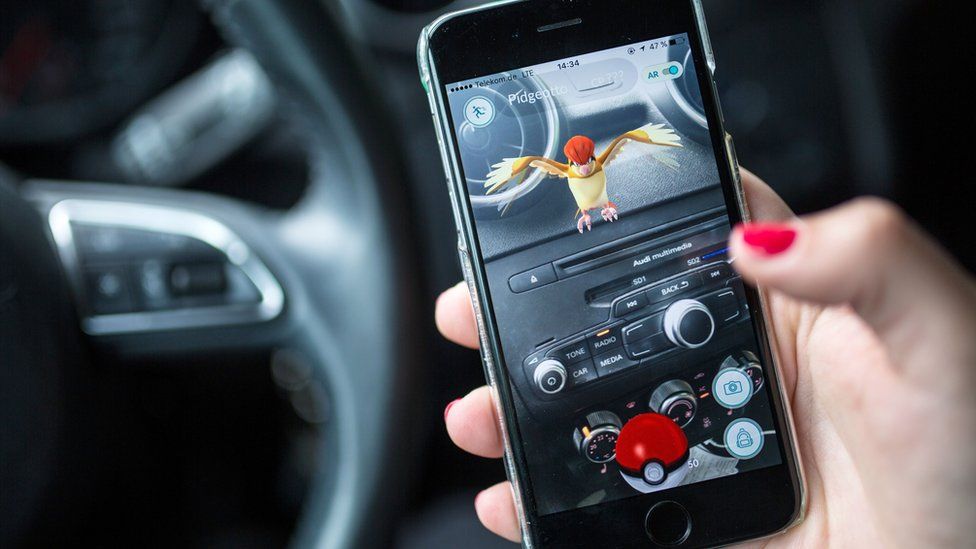
Image caption Don't catch Pidgeotto and drive!
However, trading login details could be dangerous.
Dr
Guy Bunker, from security firm Clearswift, told Newsbeat that "whenever
there is a new phenomenon such as Pokemon Go, there are several types
of people who appear to cash in on the trend.
"The first are the people who genuinely have the logins to sell which belong to them.
"After this, the cyber criminals move in. Those who start by hacking the accounts using harvested passwords."
Dr
Bunker says after that, come the phishing scams - where fake login
pages are used to trick people into revealing their passwords.
"Be aware of any link which results in being asked to download something, as this will most likely be malware," he says.
"For those who are looking for a 'quick' way to move
up the leaderboards in Pokemon Go, there really is no quick fix… play
the game and enjoy it."
On the guidelines page, Niantic Labs, the developer behind Pokemon Go, states that sharing accounts is against the rules.
"Don't do it. Play fair."
"Methods
of cheating, unfortunately, are limited only by cheaters' imaginations,
but include at a minimum the following: using modified or unofficial
software; playing with multiple accounts (one account per player,
please); sharing accounts; using tools or techniques to alter or falsify
your location; or selling/trading accounts.
"We may issue a warning, suspend you from the game, or (for serious or repeated violations) terminate your account."
THE GOODSamsung's
Galaxy S6 Edge+ has a compelling design, top-tier specs and excellent
battery life. Its second menu for the curved display adds some useful
shortcuts.
THE BAD One
of the most expensive handsets on the market, the Edge+'s usefulness
doesn't live up to its sky-high price. Fans of removable batteries and
microSD card slots will be disappointed that this has neither.
THE BOTTOM LINEBuy
the Samsung Galaxy S6 Edge+ if you love the idea of a wraparound
screen; otherwise, you'll be able to find less expensive phones that do
nearly as much.
Editors' note: This review has been updated to include information about Samsung's newest Galaxy models, the S7 and S7 Edge, which were introduced at Mobile World Congress in March 2016.
The
5.7-inch Samsung Galaxy Edge+ isn't just a larger version of the
5.1-inch Galaxy S6 Edge, but it's close. It has basically the same
hardware guts as the Samsung Galaxy Note 5 including
a strong 16-megapixel camera, 4GB of RAM and an octa-core processor of
Samsung's own design (that means it has eight computing chips for
completing tasks). Like its brethren, the Note 5, S6 and S6 Edge, the
Edge+ has a snazzy metal-and-glass design and omits the popularremovable battery and microSD card slot found
on its predecessor. The Edge+ also lacks the Note 5's signature stylus,
leaving potential buyers a choice between inviting curves or
scribble-friendly practicality.
With
the introduction of the current generation of Galaxy phones in March
2016, Samsung fans need to take a close look at the new lineup. A CNET
Editor's Choice, the Galaxy S7 delivers the goods in spades with a
polished design, awesome camera, long battery life, microSD slot, and
water resistance. And the supersized Galaxy S7 Edge, an Editor's Choice
in its own right, comes equipped with an even bigger battery and screen,
a curved screen with "edge" software navigation, and a sky high price
tag.
That
noted, the Edge+ remains a cool-looking phone that belongs in the canon
of prior-generation smartphones. Buyers craving a phone with waterfall
sides and a large, bright screen who can find the S6 Edge+ at a discount
should consider it. Everyone else should move on and choose between the
Galaxy S7 and S7 Edge.
Editors' note: What follows is the original review of the Samsung Galaxy S6 Edge+.
The
phone comes in gold, silver, black and white, though different regions
may carry different colors. Prices vary by retailer and country, but the
Edge+ costs more than the Note 5 overall.
In
the US, the Edge+ is available in gold and black but not silver or
white on the AT&T, Sprint, T-Mobile, US Cellular and Verizon
networks.
AT&T:
Full retail: $720 (32GB) or $815 (64GB). Next 24 (30 monthly payments):
$0 down and $27.17 (32GB) or $30.50 (64GB). Next 18 (24 monthly
payments): $0 plus $33.96 (32GB) or $38.13 (64GB). Next 12 (20 monthly
payments): $40.75 (32GB) or $45.75 (64GB).
Sprint:
Full retail: $792 (32GB) or $888 (64GB). Two-year service agreement:
$350 (32GB) or $450 (64GB). Lease program (24 months): $0 down and $30
(32GB) or $35 (64GB) per month, until you pay off the balance or
upgrade. Easy Pay (24 months): $0 down and $33 (32GB) or $37 (64GB) per
month.
T-Mobile: Full retail: $780 (32GB) or $860 (64GB). 24 monthly payments: $0 down and $32.50 (32GB) or $99 down and $31.67 (64GB).
Verizon: Full retail: $768 (32GB) or $864 (64GB). 24 monthly payments: $32 (32GB) or $36 (64GB).
US Cellular: 32GB version only. Full retail: $770. Two-year contract: $300. 20 monthly payments: $0 down and $38.45.
5.7-inch display; 2,560x1,440 pixels (518 pixels per inch)
Metal and glass construction
6.1 by 3 by 0.3 inches (154 by 76 by 6.9mm)
5.4 ounces (153 grams)
If
you're familiar with the Galaxy S6 Edge's curved screen and thin edges,
you already know this supersized Edge+'s shapely silhouette. The glass
(and display technology underneath) wraps around the left and right
edges and meet along the back of the spines.
What's
more important than the interesting shape is the fact that the curved
sides look beautiful, and seems to make this feel like an entirely
different, far more sophisticated, phone than a straight-sided one. The
screen seems more immersive than the Note 5's, the curvature
pulling you into the action of what's on the display. Maybe it's still
some of the novelty, maybe there's a deeper psychology at play.
Strangely, the effect is more pronounced on the smaller Edge+, possibly
because this phone is personally a little large for my hand.
At
any rate, the Edge+ feels slimmer than most at its narrowest part (the
middle), but a little inherent sharpness along the sides makes it easy
to grip. The comparatively thicker corners round out to help carry
through the themes of curviness and physical dimension.
Despite
the wraparound sides, the screen measures a full 5.7 inches, all of
which is fully usable and viewable (unlike the original Note Edge, which
had an always-visible strip of navigation screen that you couldn't turn
off). Above the screen, you'll see the 5-megapixel front-facing camera
and a cluster of sensors. Below it sits the physical home button and
integrated fingerprint reader, with its two touch-sensitive sidekicks,
the Recent and Back buttons. Press and hold the home button to launch
Google Now.
Flip
over the Edge+ to find a smooth, reflective backing and 16-megapixel
camera mount, flash and heart-rate reader. The camera module does
slightly pucker out, but that's also because the rest of the phone is so
thin and flat.
Buttons
and ports dot the Edge+'s metal frame, starting with the power/lock key
on the right, the micro-USB charging jack and headset jack down below,
volume rocker on the left, and SIM card tray along the top. There's no
removable backing (or battery), and no space for a microSD storage card.
We get neutral colors for this series: black, white, silver and gold, though not every region may sell every color.
Those curved sides are fun to look at, but they aren't merely for show. Two previous designs -- 2014'sGalaxy Note Edge
and the S6 Edge from earlier this year -- gave Samsung the chance to
experiment with things you can do on a narrow vertical display. It's
forced functionality, but one that makes more sense this time than
before.









 If you ask a pizza snob about their preferred way to cook a pie,
you’ll probably hear something about wood-burning ovens. While this is
undeniably a great way to cook pizza, it’s not exactly easy to get one
of these ovens in your home. Well, thanks to the Pizzeria Pronto
Stovetop Pizza Oven from Pizzacraft, you can make great pizza from the
comfort of your own kitchen.
If you ask a pizza snob about their preferred way to cook a pie,
you’ll probably hear something about wood-burning ovens. While this is
undeniably a great way to cook pizza, it’s not exactly easy to get one
of these ovens in your home. Well, thanks to the Pizzeria Pronto
Stovetop Pizza Oven from Pizzacraft, you can make great pizza from the
comfort of your own kitchen.
 Pizza scissors are not essential. However, if you’re looking for a
conversation starter or if you’re just a big fan of sporks and
spork-like products, these pizza scissors might be exactly what you’re
looking for.
Pizza scissors are not essential. However, if you’re looking for a
conversation starter or if you’re just a big fan of sporks and
spork-like products, these pizza scissors might be exactly what you’re
looking for. Remember when we lamented how it was nearly impossible to make a
pizza on a wood-fired oven at home? Well, if you’re willing to take your
pizza making outdoors, there’s the Uuni 2S wood-fired oven.
Remember when we lamented how it was nearly impossible to make a
pizza on a wood-fired oven at home? Well, if you’re willing to take your
pizza making outdoors, there’s the Uuni 2S wood-fired oven. While a wood-fired oven is ideal for cooking a pizza, a traditional
oven works well if you use a good pizza stone. When picking out a pizza
stone, you need consider size, material, and price.
While a wood-fired oven is ideal for cooking a pizza, a traditional
oven works well if you use a good pizza stone. When picking out a pizza
stone, you need consider size, material, and price. Serious pizza makers might insist that a wood pizza peel should be
used when placing your pie on the oven, while a metal peel is
required to remove your cooked pizza from the flame. However, we only
have enough room on this list for one more item, so which is better?
Serious pizza makers might insist that a wood pizza peel should be
used when placing your pie on the oven, while a metal peel is
required to remove your cooked pizza from the flame. However, we only
have enough room on this list for one more item, so which is better?